RFP Response: A Requirement-by-Requirement Guide for B2B Vendors
Decide whether to bid, build a compliance matrix, and write a B2B RFP response reviewers can verify. Includes a worked example and final submission checklist.
By Lead Scorer 7 min read
An RFP response is an answer to a buyer’s request for proposal. To prepare one, first decide whether you can make a credible bid. Then turn the request into a list of requirements, give each an owner, and show the reviewer where to find the answer and its evidence.
This guide is for vendors responding to a private B2B request. The buyer’s instructions govern the response. For a government procurement, follow the specific solicitation and applicable procedure rather than borrowing a private-sector template.
Decide whether to bid before assigning writers
Read the submission instructions, the scope, the evaluation criteria and the commercial terms first. A request may contain a workbook, an attachment checklist and later clarifications as well as the main PDF. Keep the documents together and record the latest version of each.
Use three questions to make the bid decision:
- Can we meet the mandatory requirements? Check non-negotiable dates, capabilities, evidence and terms with people who own them. A roadmap item does not answer a requirement for a capability available at launch.
- Can we demonstrate a reason to choose us? Identify a buyer priority and a concrete piece of evidence. A comparable implementation can be useful if the scope and conditions actually match. If the buyer does not state how it will weigh a criterion, do not invent a weight.
- Can we deliver what we will quote? Ask delivery, security and finance to confirm capacity, dependencies and price assumptions. Estimate the time needed to prepare the response and decide which other work that time would displace.
Record bid, hold for clarification, or decline, with a reason and an owner. For a hold, set a decision deadline before the submission deadline. If a clarification changes the scope, revisit the bid decision. A team should be able to explain why it chose to compete before it starts filling a template.
Build the compliance matrix from the buyer’s request
The Association of Proposal Management Professionals includes separating complex requirements into individual matrix rows among its practitioner competencies. The useful part for a small team is simple: you can see what is still unproven without rereading the whole response.
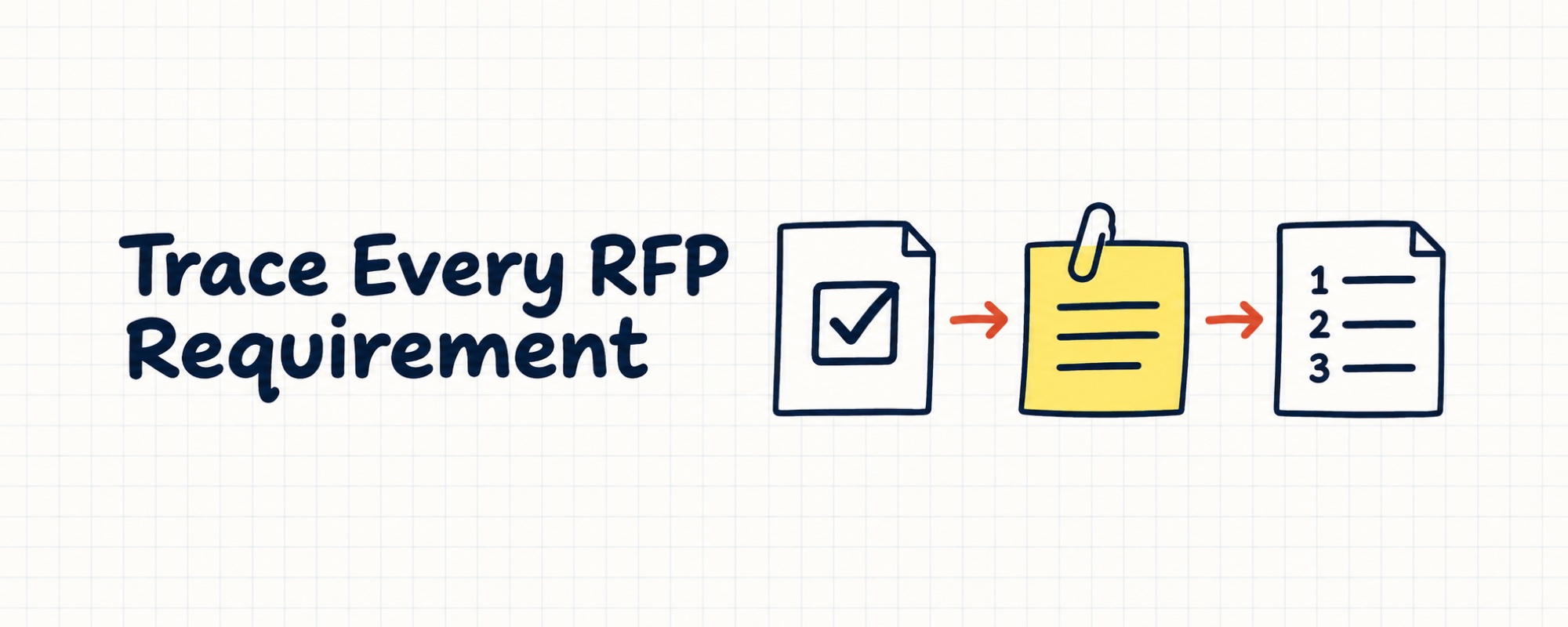
Start with one row per testable obligation. Split a clause that asks for a launch plan and a training plan into two rows, retaining the original clause number. Include instructions about file names, formats and attachments. Label mandatory items, scored items and commercial assumptions separately, using the buyer’s wording as the source.
Here is a fictional example for a vendor bidding on a support workflow rollout:
| Requirement | Owner | Answer and evidence | Response location | Status |
|---|---|---|---|---|
| 3.2a: migrate the open cases | Implementation lead | Sample mapping plus reconciliation plan | §3.2a, Appendix A | Evidence reviewed |
| 3.2b: train administrators before launch | Training lead | Agenda and named trainer; buyer dates unconfirmed | §3.2b | Dependency open |
| 5.1: separate setup and recurring fees | Finance | Completed buyer pricing workbook | Pricing tab 2 | Ready to verify |
In a working spreadsheet, add a source version, internal due date and reviewer. Use statuses that distinguish drafted, evidence checked and verified in final file. A written answer can still be wrong, and a checked answer can disappear during export.
Write answers the reviewer can score
Preserve the buyer’s headings and numbering unless it asks for a different format. Start each response with the direct answer. Explain how it will work, point to the supporting evidence, and state the assumption or exception that limits it.
For the migration row, a fictional answer could read: “We will migrate cases that are open at the agreed export date. Appendix A shows the fields included and the reconciliation checks we will run with your administrator. Attachments outside the agreed export are excluded; we will confirm that boundary before scheduling the cutover.”
That gives the buyer something to test. It also gives delivery a clear scope to review. A line like “our migration is seamless” does neither. Where the buyer asks for proof, choose the most direct artifact you can share: a sample output, an implementation plan, a relevant reference you have permission to disclose, or a narrowly scoped test. A proof of concept can help when a capability is material and needs to be demonstrated; do not offer one as a substitute for an answer already due.
Draft the executive summary after the technical and pricing owners agree on the offer. Use it to name the buyer’s objective, the scope you are proposing and the evidence you want the reviewer to see. If you also need help expressing the commercial offer itself, use the sales proposal guide; the matrix stays the source for requirement coverage.
Resolve unclear requirements in the stated channel
Ask a question that references the document and clause, explains the ambiguity and can be answered concretely. For example: “Section 3.2 refers to open cases. Should the scope include cases waiting on the requester, or only those waiting on an agent?”
Log the question and the official answer. If a new version or clarification changes a requirement, reopen the affected rows and notify both the technical owner and whoever set the price. If there is no answer, distinguish a permitted, stated assumption from an unresolved mandatory requirement. Do not let the summary, workbook and detailed answer quietly take different positions.
Verify the submission as the buyer will receive it
Give a reviewer who did not draft the response the final files and the matrix. Ask them to open the exported package and trace a mandatory requirement from source to answer, then to the cited evidence. Review the rest of the mandatory rows the same way. Check that the price workbook and narrative use the same scope, currency, dates and options.
Before submitting, confirm the required attachments, names, formats, submission channel, deadline and time zone. Open the actual files, check that references point to the right sections, and make sure permissions allow the buyer to access any linked evidence. Save the version submitted and any receipt. If there is no receipt, verify delivery by the procedure the buyer specified.
On your next RFP, start with the mandatory section. Assign each obligation a row and an owner before anyone writes the executive summary. If those rows cannot be supported, you have learned what you need to decide.
Frequently asked questions
What is an RFP response?
It is a vendor's answer to a buyer's request for proposal. It explains how the vendor will meet the stated requirements, supplies requested evidence and pricing, and follows the buyer's submission instructions.
What goes in an RFP compliance matrix?
Give each requirement a source reference, category, owner, answer, evidence, response location and review status. Record unresolved exceptions and check the final submission against the matrix.
Should you bid if you cannot meet a mandatory requirement?
Check the exact wording and use the buyer's stated question channel if a clarification could change the answer. If the requirement remains mandatory and you cannot meet it, don't present an exception as compliance.