Customer Case Study Template: Plan Approval Before Drafting
Use a customer case study template with an approval brief, story outline and version record. Prepare a named B2B account before committing to a public draft.
By Lead Scorer 8 min read
A customer case study template needs an approval plan as well as a story outline. Before drafting a named B2B account, agree what the customer might consider sharing, who can review it and which version would be published where. A useful internal contact can help navigate that decision. Their enthusiasm alone does not settle it.
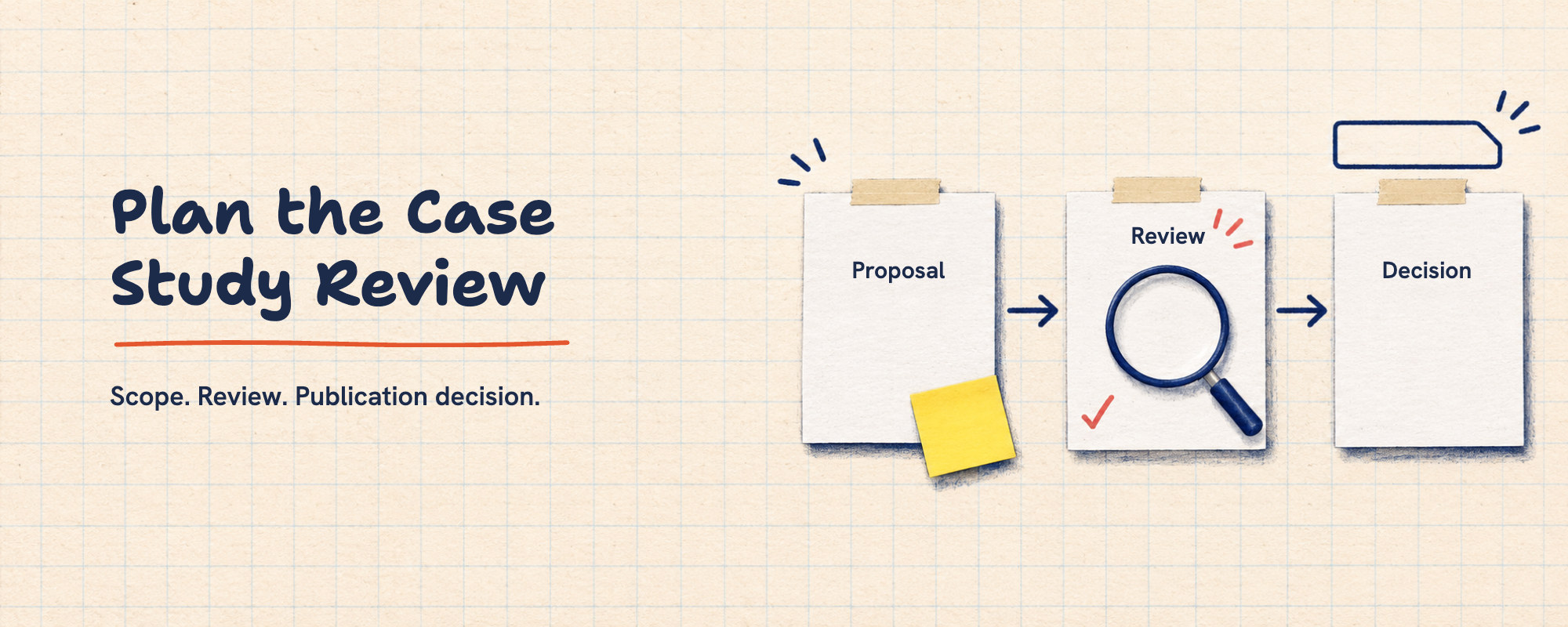
The copyable templates below are planning documents: an approval brief, a story outline and a version record. They are intended for a small supplier working with a larger customer's review process. They are not contract clauses, a downloadable design file or a promise that the customer will participate.
The podcast problem: a customer can use the product and decline a case study
In episode 852 of Startups for the Rest of Us, Rob Walling and Ruben Gamez discuss a small company's difficulty obtaining case studies from recognizable customers. The listener already knows how to conduct the interview. The unresolved problem is getting agreement inside a larger organization.
Their discussion separates an early conversation about participation from the eventual existence of a usable case. Walling keeps the possibility that the product might not work for that customer in view. Gamez describes the importance of someone inside the organization who will support the request. These are practitioner perspectives, not an experiment establishing an approval rate or a standard timetable.
This guide turns that distinction into an editorial planning workflow. The templates and fictional example are our proposals, not a tested framework supplied by the speakers. Numerical discounts, illustrative deadlines and speculation about another company's commercial arrangement are not evidence for the process below.
Start by identifying the decision that is still open
A short testimonial, a detailed customer case study, permission to show a logo and a reference call are different requests. Name the one you are making. Asking for “a little customer marketing” leaves too much room for different interpretations of the work and its intended use.
If your contact says they cannot approve publicity, first ask whether a review route exists. They may be able to identify an appropriate colleague without being able to authorize publication. A clear refusal is also an answer. Do not treat repeated requests to the same person as a substitute for understanding the decision.
Record the role and scope of each contact rather than assigning imaginary authority. The person who knows daily use may verify operational facts; a communications contact may coordinate public wording. The actual roles depend on the customer's process. Our sales champion guide explains the broader distinction between a friendly contact and someone who can mobilize an internal decision.
Template 1: the customer case study approval brief
Copy this into your team's authorized workspace and complete it before a long interview. Keep unknown fields visible.
| Field | Fill in | Review question |
|---|---|---|
| Proposed account | Customer, team and use case under consideration | Does the customer recognize this scope? |
| Purpose | The buyer question the case should help examine | Why is a detailed story useful here? |
| Readiness | Actual use and observations available so far | Is there an experience to describe yet? |
| Proposed material | Text, attribution, name, logo, images and data being requested | Which items can enter review? |
| Intended uses | Exact proposed page, sales document or other destination | Are the proposed uses understood? |
| Review route | Contact, reviewers, owner and next agreed action | Who can answer each open question? |
| Publication gate | Version to be reviewed and how a decision will be recorded | What must happen before release? |
The brief is a proposal, not an assertion of permission. A field such as intended uses should describe the real plan, not an unlimited list added just in case. If a later advertising use is contemplated, bring that changed scope back through the relevant review.
Separate readiness from willingness. A customer may be willing to discuss a future case before meaningful use exists. Conversely, a successful deployment may never become a public story. Neither condition should be silently converted into the other.
Ask for a bounded next step
The first message can ask whether the proposed review is possible, rather than demanding an endorsement. For example:
Would your team consider reviewing a case about the request-routing workflow we implemented together? We would first send a brief defining the team, available observations and proposed use on our website. Could you advise who should review that proposal? No public draft would be released while the decision remains open.
This is fictional request copy, not a customer exchange. Replace the workflow and destination with the real proposal. Avoid writing “as agreed” if the customer has not agreed. If an early commercial discussion included possible participation, return to the current experience and current review process before preparing a public account.
Make the next action small enough to decide: identify a reviewer, correct the scope or decline the proposal. A silence is an unresolved status. It should not become an approval date in the content calendar.
Template 2: outline the story without filling gaps
Once the customer is willing to explore the case, outline the account before polishing it. The structure helps reviewers see what would be discussed.
- Reader and situation: who needs this account, and which operational conditions matter?
- Starting problem: what was happening before the work, according to a source who knows?
- Scope of the work: which team, process and part of the offer were involved?
- Implementation: what changed, who contributed and what dependencies remained?
- Observations: what can be supported, over which period and with what definition?
- Limits: what was not measured, what remains incomplete and where comparison would be weak?
- Attribution and review: which wording and identifying details are proposed for publication?
These are outline headings, not instructions to manufacture a before-and-after result. If no quantitative result is available, use an accurately bounded qualitative account. Do not turn a person's estimate into a measured business outcome.
The existing client testimonial guide provides interview questions and an evidence sheet. This approval plan handles a different bottleneck: arranging the decision about a named corporate story before asking a writer to produce it. Use the interview guide when evidence collection is the next agreed step.
A fictional example: the user and the publication reviewer are different people
Imagine a small workflow supplier supporting a purchasing team's request-routing process. Everything in this example is invented. The operational contact is happy to explain how the team uses a shared routing checklist. That person says corporate publicity is reviewed elsewhere.
The supplier's first draft of the brief lists one team, the implemented workflow and a proposed website case. It does not claim company-wide deployment. The operational contact can review the process description and identify the colleague who coordinates external material.
The review then reveals two unresolved points: the proposed attribution needs confirmation and the claimed observation period is unclear. The supplier leaves the account in review, corrects the factual period and removes an unsupported outcome. It does not add the logo to the site while waiting.
If the customer ultimately declines a named story, the supplier closes that request. A different proposal, such as an account without identifying details, would require its own review. Removing a name alone should not be assumed to settle every concern about the material.
Template 3: keep the version and decision together
Create one release record containing the asset identifier, exact draft version, proposed destinations, reviewers, requested corrections, decision status, responsible owner and last review date. Preserve the reviewed wording alongside the source notes in the storage your team uses for this work.
Use explicit statuses such as proposal, fact review, publication review, approved for stated use, declined and retired. These are suggested editorial states, not a universal corporate policy. Record the reason for an open status rather than repeatedly moving the expected publication date.
Before release, check that the published version is the one reviewed. Recheck a change to the title, attributed quote, number, logo or destination. A visually minor edit can still change the meaning of the account. Keep a practical route for corrections after publication.
Review the process before building an automation
Track requests, accepted reviews, completed decisions and time waiting for a specified next action separately. Small counts are useful for managing work; they do not establish a conversion lift. A case study used in a successful sale does not by itself show that the story caused the sale.
Lead Scorer can help organize account context and reviewed outreach around the request. It cannot determine the customer's publication authority or supply a missing outcome. The useful final artifact is a bounded story whose evidence, version and intended uses can be traced, including a clear decision not to publish when the request is declined.
Frequently asked questions
What should a customer case study template include?
This guide supplies an approval brief, a story outline and a version record. Define the customer scope, available experience, proposed material and destinations, review route and publication decision before drafting.
How do you ask a large customer to consider a case study?
Send a bounded proposal describing the use case and intended destination. Ask whether a review route exists and who can coordinate it. A willing operational contact may verify facts without being able to authorize publication.
Can a customer agree before results are available?
A customer may be willing to discuss a future case, but that is different from having an experience ready to publish. Revisit the actual use, available evidence and current review process before producing a public account.
What if the customer declines a named case study?
Close the declined request. Any different proposal, such as an account without identifying details, needs its own review. Do not assume that silence or removing a name settles the decision.